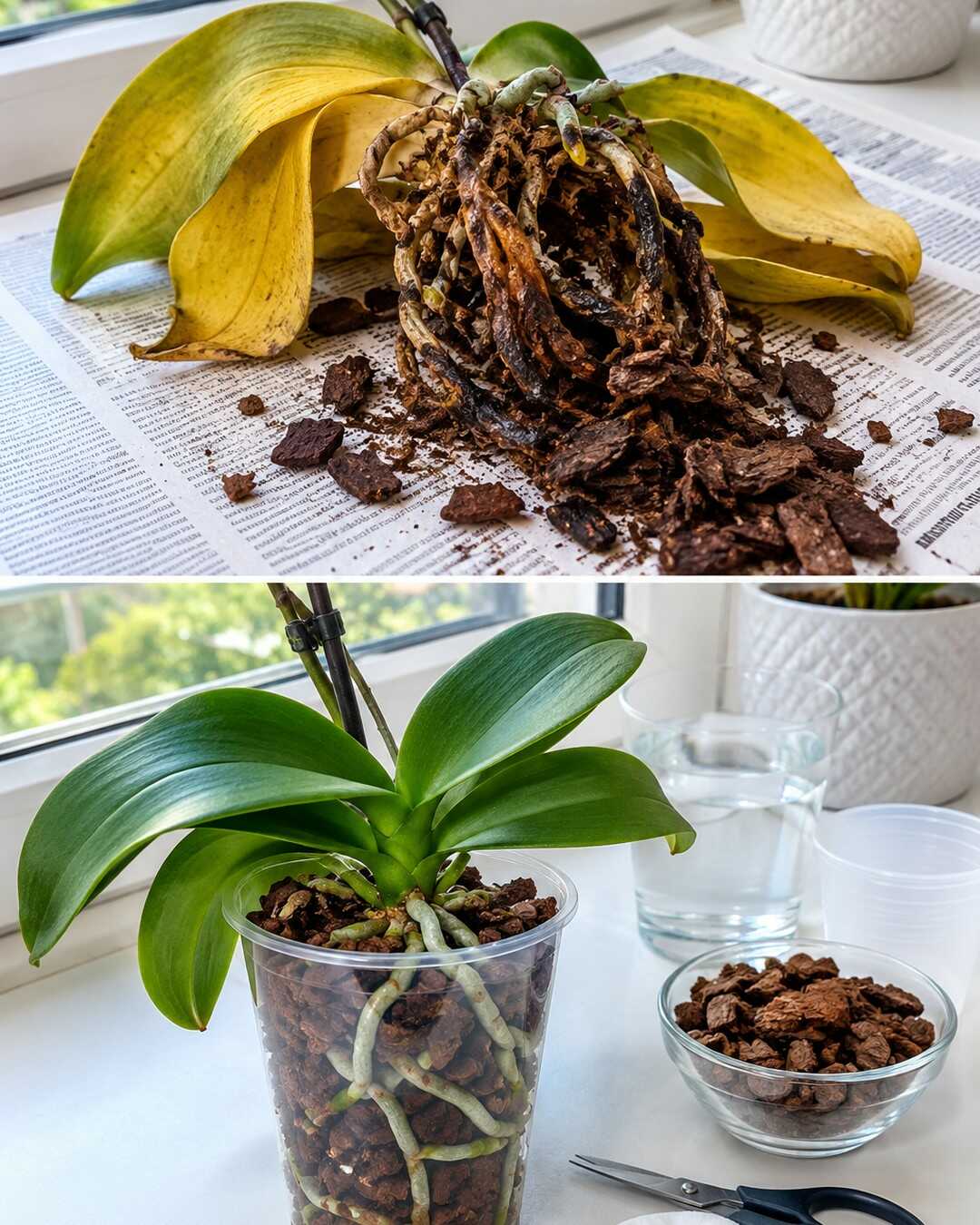
I almost threw my orchid away. The leaves were limp and wrinkled, and when I tipped it out of the pot, half the roots were brown and mushy. Too much water in old, broken-down bark had suffocated them. What saved it was not a potion but a careful clean-up, fresh bark and a simple clear plastic cup as a temporary pot, so I could see exactly when the roots needed water. As long as there is a healthy crown and a few firm roots, an orchid can usually come back.
What you need
- 1 pair clean, sharp scissors or pruners
- a little, on a cotton pad rubbing alcohol for sterilizing the blades
- about 2 cups (500 ml) fresh orchid bark
- 1 (about 12 oz / 350 ml) clear plastic cup with holes punched in the base and sides
- 1 cup (250 ml) room-temperature water
How to do it
- Unpot the orchid and gently shake and pick away all the old bark. Rinse the roots under room-temperature water so you can see what is alive. Healthy roots are firm and silvery or green; rotten ones are brown, hollow or mushy and peel away when you pinch them.
- Wipe the blades with rubbing alcohol, then cut off every rotten or hollow root back to firm tissue. Remove any yellow, soft leaves at the base too. Clean tools stop you passing disease from one cut to another.
- Let the plant sit on a paper towel in a shady spot for a few hours so the cuts dry and seal. Wet, fresh wounds put straight into damp bark are an open door for more rot.
- Prepare the cup. Punch or melt several small holes in the base and sides of a clear plastic cup for drainage and air. Hold the orchid so the base of the leaves sits just at the rim, and gently trickle fresh bark around the roots, tapping the cup to settle it. Do not pack it tight.
- Wait three or four days before the first watering so the cut roots can heal. Then soak the cup in a bowl of room-temperature water for 10 to 15 minutes and let it drain completely.
- Use the clear cup as your guide. Water again only when the roots inside look silvery and the bark looks dry, not on a fixed schedule. Keep the plant in bright, indirect light and away from radiators. Within one to two months, you should see bright green root tips growing; once the plant is stable, move it to a proper clear orchid pot.
Good to know
- If the leaves are badly wrinkled, a humid spot, like a bright bathroom, helps while the new roots form.
- If no healthy roots are left at all, the plant can sometimes still regrow roots in a humid clear container, but the chances are lower and it takes months.
- Replace orchid bark every one to two years; old bark breaks down, holds too much water and is the usual cause of root rot.
Mine took about two months to grow three fat new roots and its leaves firmed up again. A year later it flowered. Do not give up on a limp orchid too soon.