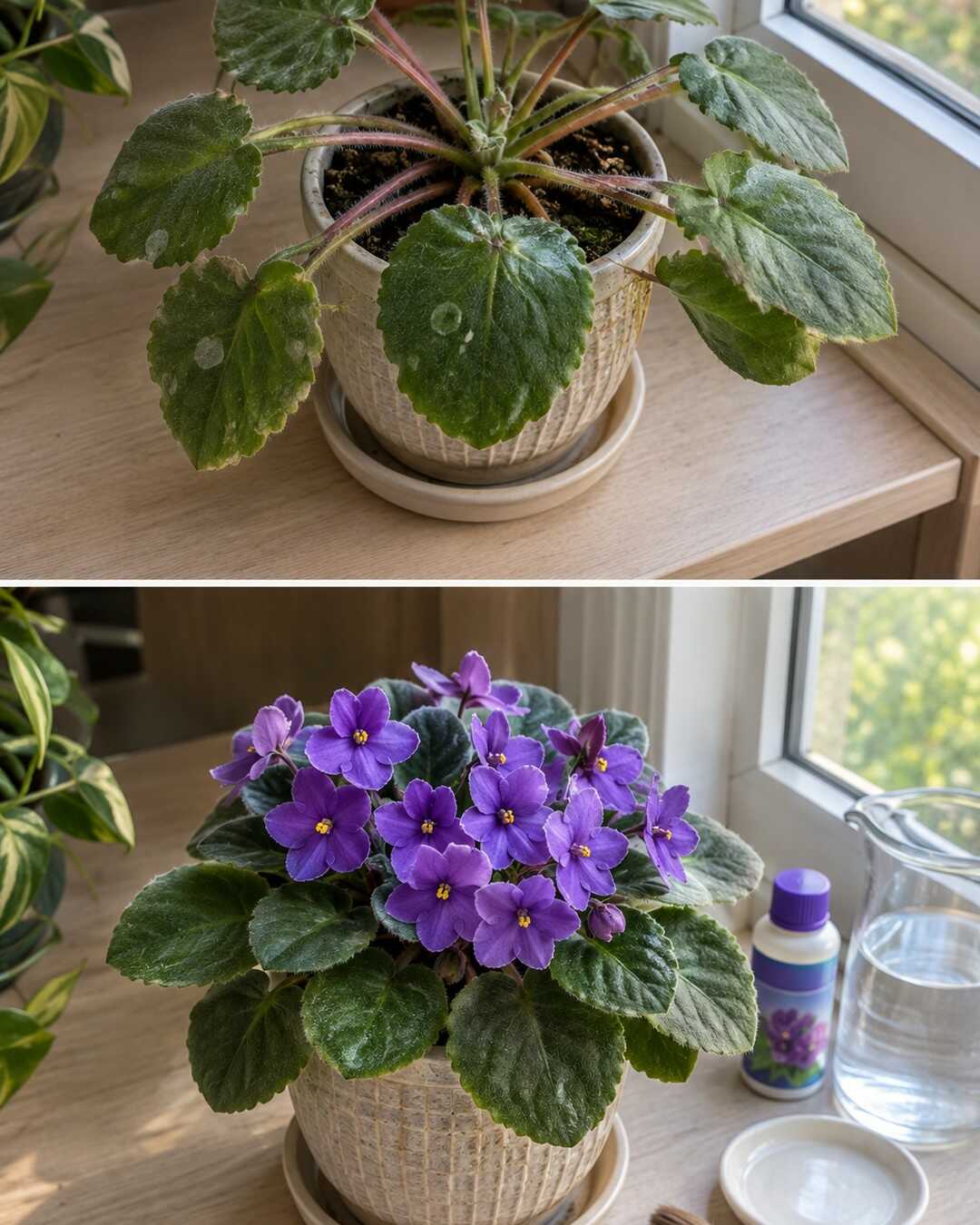
African violets have a reputation for being fussy, and mine proved it. It sat on a shelf for months, healthy green leaves and not a single flower. Eggshells and kitchen tricks did nothing. What worked was a tiny, regular spoon of proper violet fertilizer in its water, watering from below and moving it into better light. African violets bloom almost nonstop when their needs are met, and those needs are surprisingly simple once you know them.
What you need
- 1/4 teaspoon (about 1 ml) African violet fertilizer (or balanced liquid fertilizer)
- 4 cups (1 liter) room-temperature water
- 1 deep saucer or bowl
- 1 soft brush
How to do it
- Find the right light first. African violets flower when they get bright, indirect light for many hours a day. An east or north window works well; a south or west window is fine if a sheer curtain softens the sun. In dark autumn and winter months, many growers put them 12 inches (30 cm) under an ordinary LED light for 10 to 12 hours a day.
- Mix the spoon. Stir 1/4 teaspoon (about 1 ml) of African violet fertilizer into 4 cups (1 liter) of room-temperature water, or follow the weak, every-watering dose on your bottle. Violet foods contain a little more phosphorus, which supports flowering, but the real point is a gentle, steady supply.
- Water from below. Pour some of the mix into a saucer and set the pot in it for 20 to 30 minutes, until the top of the soil feels just moist. Then lift it out and let it drain. This keeps water off the fuzzy leaves, where cold drops leave pale spots and can cause rot in the crown.
- Only water when the top of the soil feels dry to the touch, usually once or twice a week. Use water that is at room temperature or slightly warmer; cold water shocks the roots and marks the leaves.
- Keep the pot snug. Violets bloom best when slightly root-bound, in a pot about one third the width of the leaf spread. A pot that is too large keeps the soil wet and pushes leaves instead of flowers.
- Groom it every week. Pinch off spent flowers and any limp outer leaves, and brush dust from the leaves with a soft dry brush. If side crowns appear, remove them so the plant keeps a single crown and puts its energy into flowering.
Good to know
- Once every month, water from the top with plain water until it drains, to flush out salt from the fertilizer.
- Long, stretched leaf stems mean the plant is reaching for more light.
- African violets like the same temperatures we do, around 65 to 75°F (18 to 24°C), and dislike cold windowpanes on winter nights.
My violet started budding about six weeks after I moved it and began feeding it this way, and it has hardly stopped since.