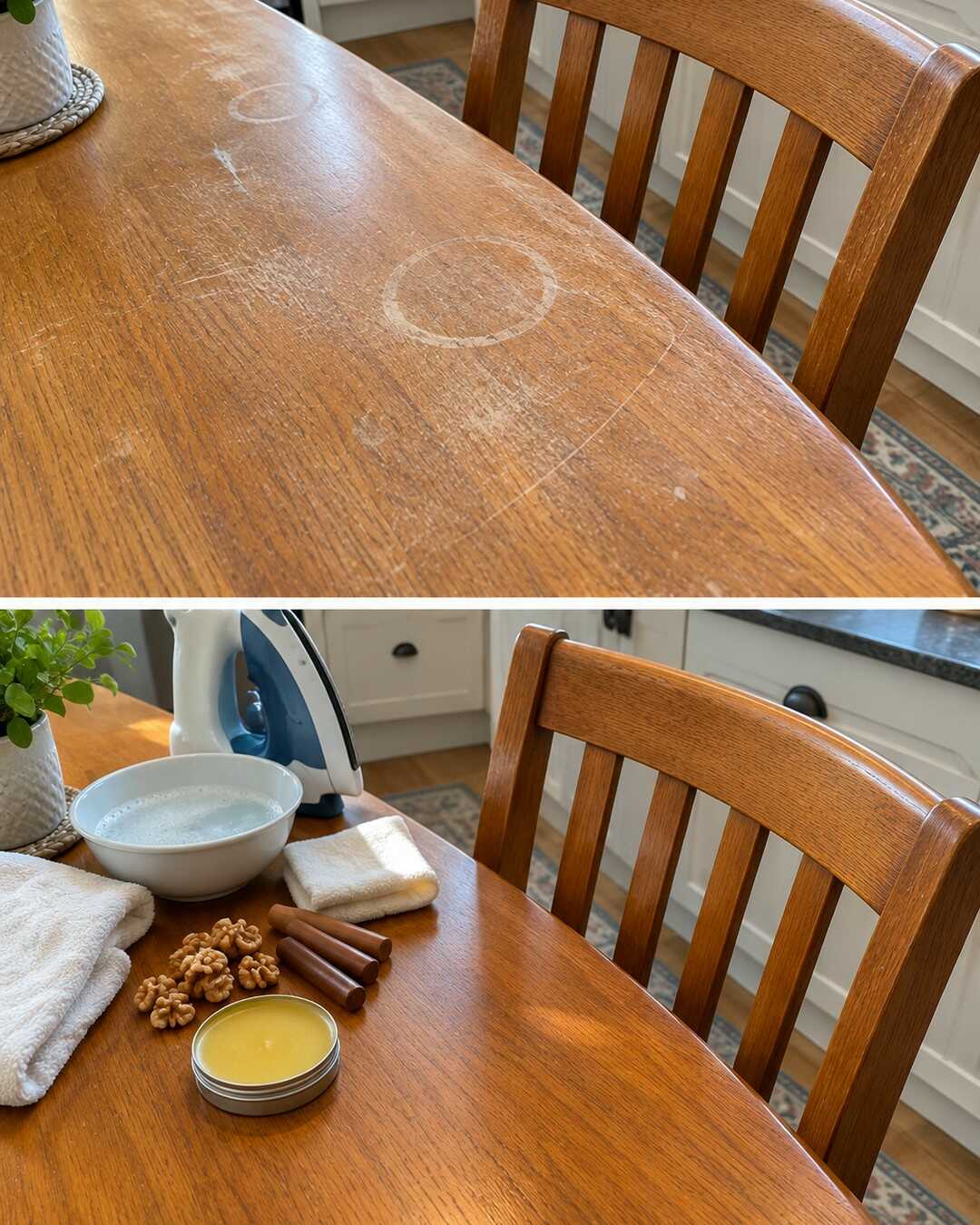
Our kitchen chairs and the old oak table have seen twenty years of homework, birthday parties and hot mugs set down without a coaster. They were covered in pale scratches and a few white rings, and I thought my only choice was to sand and paint them. Then I learned that most of this damage sits only in the top layer of the finish. With a few things from the kitchen drawer, you can hide light scratches, lift many water rings and bring back the shine, without paint or sanding.
What you need
- 1 or 2 raw walnut, shelled
- 1 to 2 wax crayons or furniture wax sticks in a matching wood tone
- 1 each clothes iron and a thin cotton towel
- 1 tsp (5 ml) in 1 quart (1 liter) mild dish soap and warm water
- 1 small tin clear or tinted paste furniture wax
- 3 soft cloths
How to do it
- Clean first. Wipe the furniture with a cloth dipped in the soapy water and wrung out well, then with a cloth dampened in clean water, and dry. Grime makes scratches look worse than they are. Test every step below on a hidden area, such as the underside of the table.
- For light scratches: rub the walnut back and forth over the scratch, then rub along it with your finger to warm it. The natural oils and color darken the pale line and blend it into the wood. Wait 5 minutes, then buff with a soft cloth. Do not use this method if anyone in the house has a nut allergy.
- For deeper scratches and small nicks: rub a matching wax crayon or wax stick into the gap until it is filled, scrape off the excess with the edge of a credit card and buff.
- For white water rings: set the iron to low with no steam and empty the water tank. Lay a dry cotton towel over the ring and press the iron on it for 5 to 10 seconds, then lift and check. Repeat a few times. White rings are moisture trapped in the finish, and gentle heat lets it escape. Never use it on dark black rings, which have reached the wood itself.
- Once everything is dry, apply a thin coat of paste wax over the whole surface with a soft cloth, let it haze as the tin directs and buff to a soft sheen.
- Let chairs and tables rest for a few hours before use so the wax can firm up.
Good to know
- Keep the iron moving and on low heat; too much heat can damage the finish.
- A tinted wax in the right color also hides worn edges on chair legs.
- Skip all of this on painted, veneered antique or valuable pieces; ask a restorer instead.
- Felt pads under chair legs and coasters on the table will keep the results for years.
One afternoon, a walnut and a tin of wax, and the furniture you almost replaced looks loved instead of worn out. Start with the chair that bothers you most and tell me how it turned out.