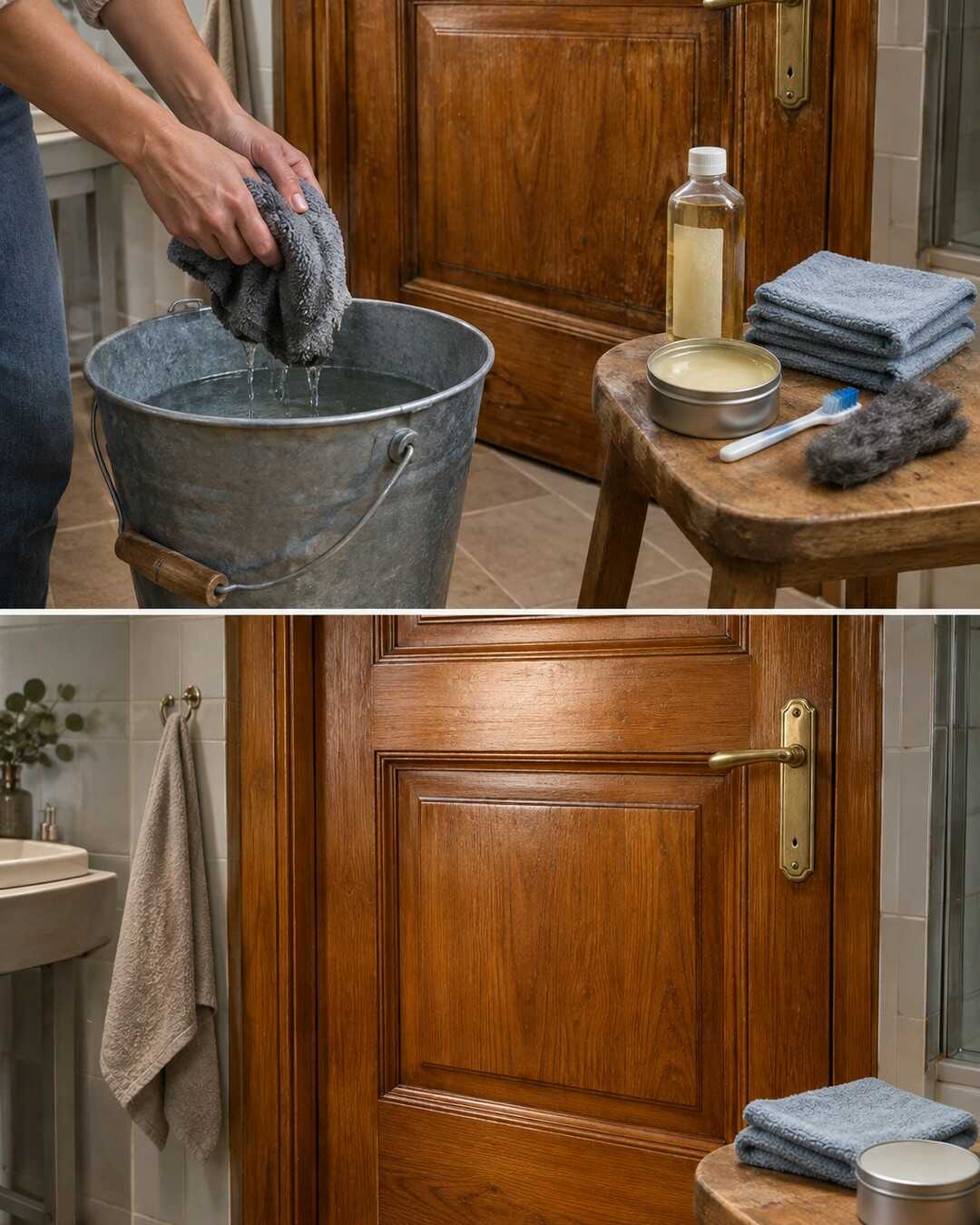
The doors in our old house are original, about 90 years old, and for years they just looked tired: dull, slightly sticky around the handles, gray near the kitchen. I was sure they needed stripping and refinishing. They did not. Most of that dullness is a film of grease, hand oils and dust sitting on top of a finish that is still perfectly sound. Take the film off gently, feed the surface with a thin layer of wax, and the grain shows again. This works on varnished, oiled and waxed wood, as long as the finish is not flaking off.
What you need
- 1 quart (1 liter) warm water
- 1 tsp (5 ml) dish soap or 2 tbsp (30 ml) wood soap mild dish soap or wood soap (such as Murphy Oil Soap)
- 3 soft microfiber cloths
- 1 soft toothbrush
- 1 small tin clear paste furniture wax (beeswax or carnauba based)
- 1 pad very fine steel wool, grade 0000, optional
How to do it
- Test first. Choose a hidden spot, such as the edge of the door near the hinges, and try each step there before doing the whole door. Wait until it is completely dry and check that the finish has not turned cloudy or soft.
- Dust the door from top to bottom with a dry microfiber cloth, including the top edge and the grooves of the panels, where dust packs in.
- Mix the soap into the warm water. Dip a cloth, wring it out until it is only damp, never dripping, and wipe the door in the direction of the grain, one panel at a time. Use the soft toothbrush in the corners of the moldings and around the handle plate.
- Wipe each panel right away with a second cloth dampened in clean water, then dry it with a dry cloth. Water left standing on old wood can raise the grain or leave white marks, so work in small sections.
- For stubborn sticky patches around the handle, rub very lightly with grade 0000 steel wool dipped in a little paste wax, always along the grain. The wax lubricates the steel wool so it lifts the grime instead of scratching the finish.
- Once the door is completely dry, apply a thin coat of paste wax with a cloth in small circles, then follow the grain. Let it haze for 10 to 15 minutes, as the tin says, and buff with a clean cloth until it glows. A thin coat shines; a thick coat stays sticky.
Good to know
- Avoid all-purpose sprays with ammonia or bleach on wood: they can dull or strip old finishes.
- If the finish is flaking, crackled through to the wood or turns sticky when wiped, it is worn out, and cleaning will not fix it; that door needs refinishing.
- Wax once or twice a year is enough. In between, a dry dust is all the doors need.
- Painted doors are different: just the soapy wash and a dry wipe, no wax.
It takes about an hour per door, and the difference is honestly startling: the grain comes back, the handles stop feeling tacky and the whole hallway looks warmer. Start with the one door everybody touches most and see for yourself.