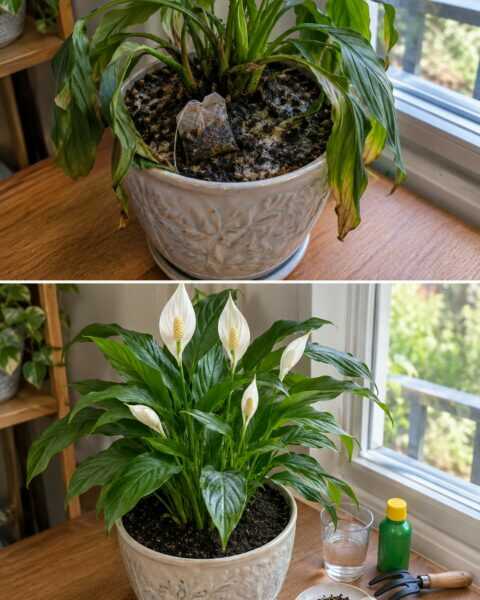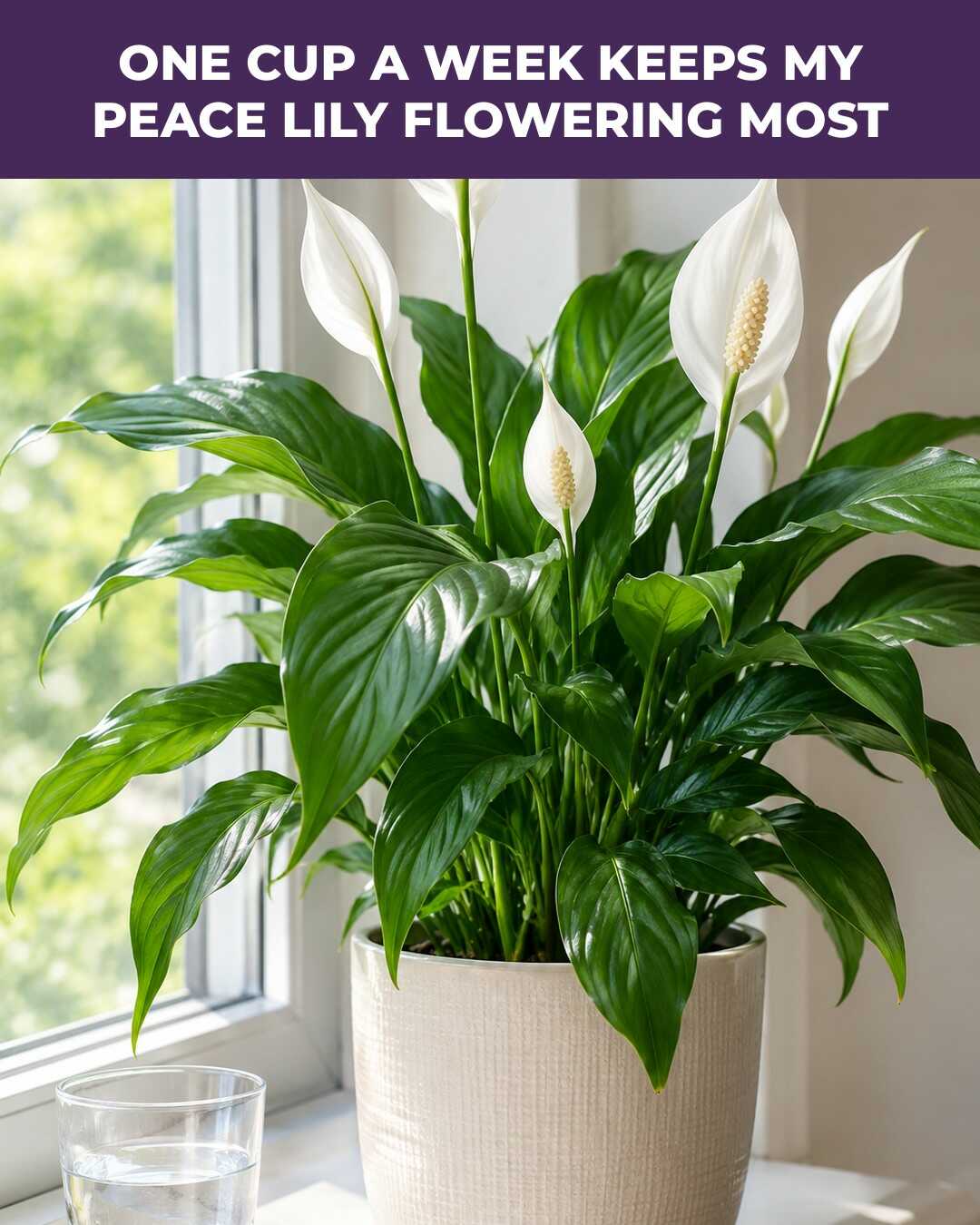
A peace lily is the plant everyone has and almost everyone struggles to keep in flower. Mine used to give me one bloom a year and then sulk. The change came when I stopped guessing and gave it a steady routine: a weekly check, one cup of rested water when it needs it, a weak feed in the growing months and a brighter spot. No peace lily blooms every single day of the year, but a healthy one can flower in waves several times a year. Here is how I keep mine going.
What you need
- 1 cup (250 ml) per 6-inch (15 cm) pot room-temperature water, rested overnight
- a few drops (half the label dose) balanced liquid houseplant fertilizer
- 1 pair clean scissors
- 1 damp soft cloth
How to do it
- Pick one day a week for your check. Push a finger into the soil; if the top inch (2 to 3 cm) is dry, it is time to water. If it is still damp, leave it and check again in a few days. A peace lily likes evenly moist soil, never soggy and never bone dry for long.
- Pour 1 cup (250 ml) of room-temperature water slowly around the edge of a 6-inch (15 cm) pot, adjusting for larger pots, until a little drains out. Empty the saucer after 15 minutes. Roots standing in water cannot breathe and the leaves start to yellow.
- Move it into brighter light. Peace lilies survive in shade, but they flower in bright, indirect light, for example a few feet from an east or north window, or behind a sheer curtain on a sunny one. Too little light is the main reason a healthy peace lily stops blooming. Avoid hot direct sun, which scorches the leaves.
- Feed lightly from spring to early autumn. Once a month, add a few drops of balanced liquid fertilizer to the watering cup, at half the label dose. Too much fertilizer gives brown leaf tips and lots of leaves but no more flowers.
- Cut off finished flowers. When a white spathe turns green or brown, follow its stem down to the base and snip it there. The plant stops spending energy on an old bloom and can start the next one.
- Wipe the leaves with a damp cloth every two weeks so they catch as much light as possible, and keep the plant away from radiators and cold drafts, which dry the leaf edges.
Good to know
- Dramatic drooping is the plant's thirst signal; water it and it usually stands up again within a few hours. Do not let it happen often, though, as it stresses the plant.
- Brown, crispy leaf tips usually point to very hard water, too much fertilizer or dry air from the heating.
- A plant that has not flowered for years and has roots circling the pot may need dividing or a pot one size bigger in spring.
A weekly check, a cup of water, a brighter corner and patience. Mine is putting up two new flowers as I write this.