My moth orchid finished flowering two winters ago and then sat there with nothing but leaves. I was watering it a splash at a time whenever I remembered, which turned out to be the real problem. What finally worked was one cup of water a week, given the right way, plus a weak feed and a little cool air in the fall. It is not a magic potion and it does not work overnight. It simply gives the roots what they need, and healthy roots are what pay for new leaves and a new flower spike. Here is exactly what I do.
What you need
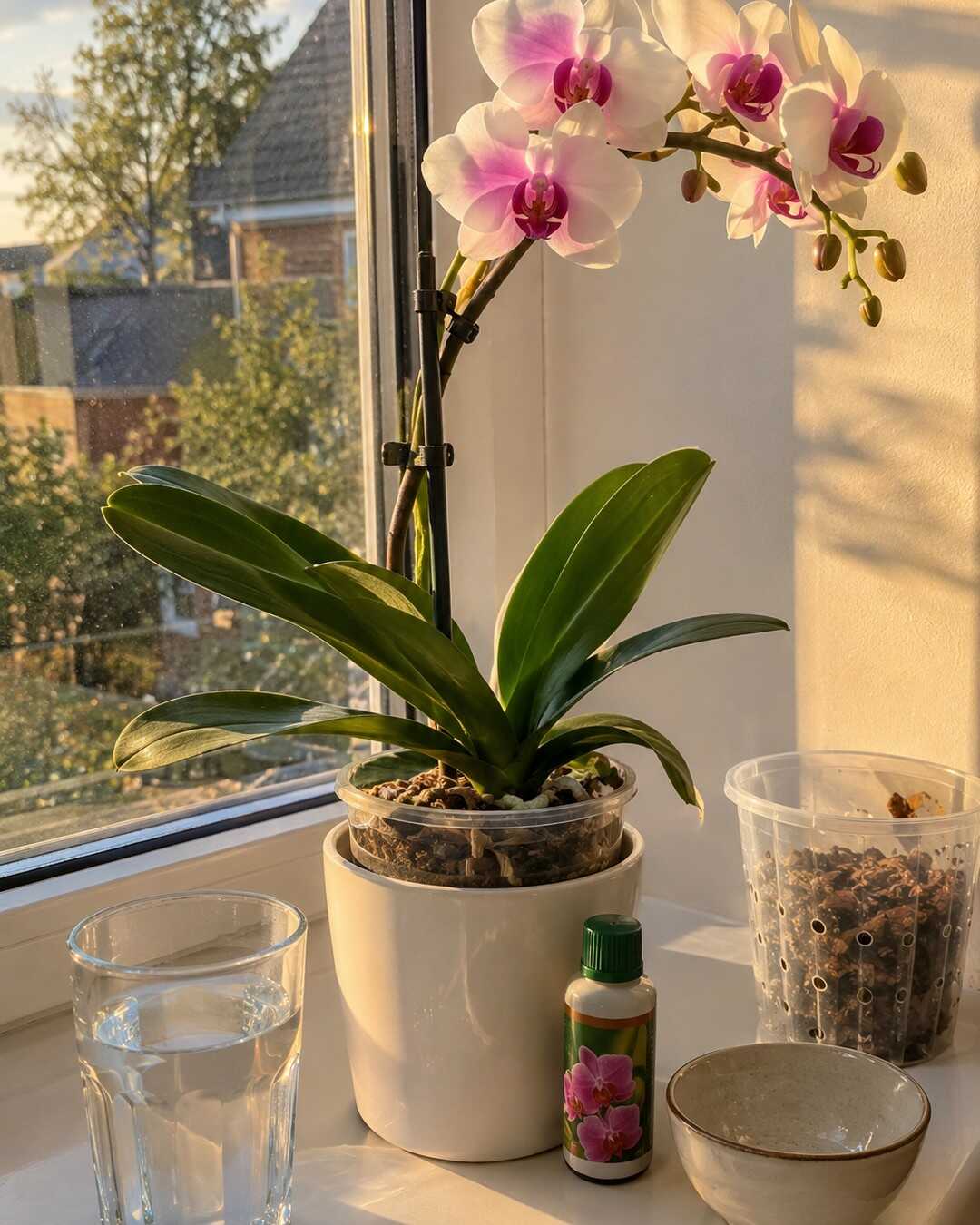
- 1 cup (250 ml) room-temperature water, rested overnight
- a few drops (a quarter of the label dose) orchid fertilizer or balanced liquid houseplant fertilizer
- 1 bowl or deep saucer
- 1 clear orchid pot with drainage holes
How to do it
- Fill a cup with tap water the evening before and leave it on the counter. Room-temperature water is kinder to the roots than cold water, and if your tap water is heavily chlorinated, part of the chlorine escapes overnight. Rainwater or filtered water is even better if you have very hard water.
- Check the roots before you water. In a clear pot this is easy: silvery-green roots and light, dry bark mean it is time. Bright green roots mean the plant still has water, so wait a few more days. In an opaque pot, lift it; a light pot is a thirsty pot. Most orchids indoors need water about once a week, a little less in winter.
- Set the orchid pot in a bowl and pour the cup of water slowly over the bark, not into the crown where the leaves meet. Let it soak for 10 to 15 minutes so the bark and the spongy roots can absorb what they need.
- Lift the pot out and let it drain completely. Never leave the orchid standing in water; roots that sit wet run out of air and start to rot, and that is the most common way orchids are lost.
- Feed weakly, weekly. Add a few drops of orchid fertilizer to the cup, about a quarter of the dose on the label, three weeks out of four. On the fourth week use plain water to rinse out mineral salts. Little and often suits epiphytes much better than one strong dose.
- Give it bright, indirect light, such as an east window or a spot 3 feet (1 meter) back from a sunny one. Then, in autumn, let it feel nights about 10 to 15°F (5 to 8°C) cooler than the day for three or four weeks, near a cool window but away from drafts and radiators. That temperature drop is the signal that tells a moth orchid to start a new spike.
Good to know
- A new spike looks like a little gray-green mitten growing from between the leaves, while a new root is round-tipped and silver. Do not confuse the two.
- Wrinkled, leathery leaves usually mean the roots are not drinking, either because they are too dry or because they have rotted. Check the roots before adding more water.
- Expect patience: after the cool nights, a spike typically appears within one to three months and takes another two or three months to open its flowers.
One cup, a weak feed, good light and a cool autumn night. That is the whole secret, and it has given me flowers every year since.