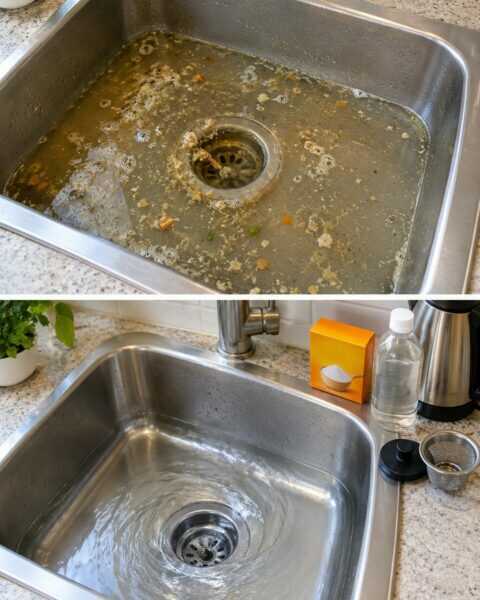
When our dishwasher started leaving grit on the plates and smelling like old soup, I called a repair technician, expecting a big bill. He pulled out the filter, showed me a gray mush of food scraps and grease, and said most of his calls are exactly this. His advice: clean the filter once a month, then run a hot empty cycle with a cup of white vinegar. It takes ten minutes of actual work, and the machine has run like new ever since.
What you need
- 1 cup (240 ml) distilled white vinegar
- 1 cup (about 220 g) baking soda
- 1 dishwasher-safe glass measuring cup or bowl
- 1 old toothbrush
- a few drops in a sink of water mild dish soap and warm water
- 1 damp cloth
How to do it
- Empty the dishwasher completely and check your manual first. Most filters twist out from the floor of the tub in a few seconds; a few machines have a self-cleaning grinder instead and only need the cycle below.
- Lift out the filter and soak it in warm soapy water for a few minutes, then scrub the mesh gently with the old toothbrush until you can see light through it. Rinse and put it back, locking it firmly in place.
- Wipe the rubber door seal and the bottom edge of the door with a damp cloth. Food and grease collect in the fold under the door, and that is often where the smell comes from. Check the spray arms too: pick out any seeds or glass shards stuck in the holes with a toothpick.
- Fill the glass measuring cup with 1 cup (240 ml) of white vinegar and set it upright on the top rack. Run the hottest cycle your machine has, completely empty, with no detergent. The vinegar slowly spills during the wash and dissolves limescale and greasy film.
- Optional for a strong smell: after that cycle, sprinkle 1 cup of baking soda over the floor of the tub and run a short hot rinse. Never put vinegar and baking soda in the same cycle; they simply cancel each other out.
- Leave the door ajar for an hour afterwards so the inside dries completely.
Good to know
- Once a month is plenty. Some manufacturers advise against frequent vinegar because it can wear rubber seals over time; if your manual says so, use a dishwasher cleaner made for your machine instead.
- Never mix vinegar with bleach or bleach-based dishwasher products.
- Scrape plates into the trash, but do not pre-rinse them spotless: modern detergents need a little food to work properly.
- White streaks on glasses in hard-water areas usually mean the rinse aid is empty.
Put it on the calendar for the first Saturday of every month. Ten minutes, a cup of vinegar, and you will open the door to clean glasses and no smell at all.